
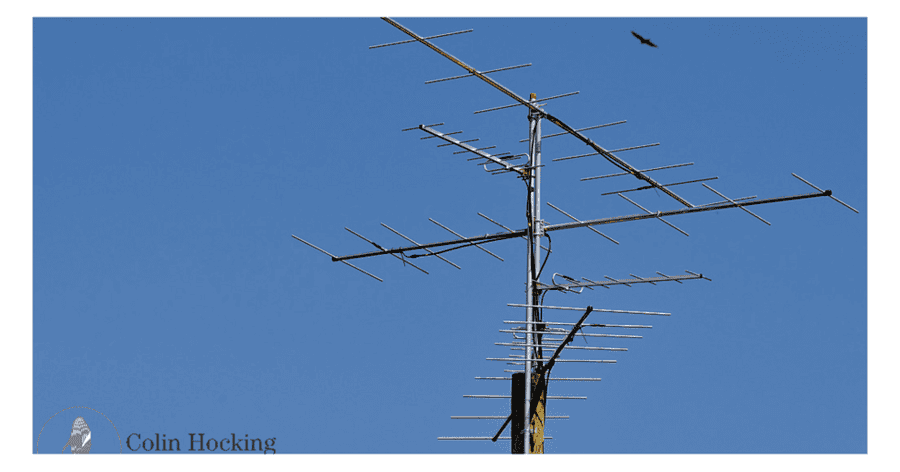

RAVENEL, S.C. — Visitors to the rice fields at Caw Caw Interpretive Center may notice a new addition to the skyline — the Motus Wildlife Tracking System, a state-of-the-art tool helping scientists track the movements of birds, bats, and large insects across the globe.
The Motus Wildlife Tracking System (“Motus” is Latin for “movement”) is a global, collaborative research network run by Birds Canada, the country’s leading charitable organization dedicated to bird science and conservation. Using tiny, digitally encoded radio tags safely attached to animals, researchers can monitor migration patterns, flight speed, and behavior as the animals are detected by receiver stations like the one now operating at Caw Caw.
Thanks to a generous grant from the Dominion Energy Charitable Foundation, and the combined efforts of Charleston County Park Naturalists, Caw Caw Maintenance Staff, and partners from Audubon South Carolina, our system is now up and running — and has already detected its first species, an American Kestrel!
Data collected from Motus stations are shared globally through Birds Canada, where they are archived and made accessible to researchers and the public. You can explore detections and animal movements at www.motus.org. Click on the “Explore” tab to view the map of stations, zoom in to find the tower near you to discover which species have been recorded and how far they’ve traveled.
This exciting addition places Caw Caw Interpretive Center among hundreds of research sites worldwide, contributing to a deeper understanding of wildlife migration and conservation. Do you want to explore the data for yourself? Visit motus.org and click “Explore” to see which species have passed through stations near you!